Views: 0 Author: Site Editor Publish Time: 2026-08-15 Origin: Site
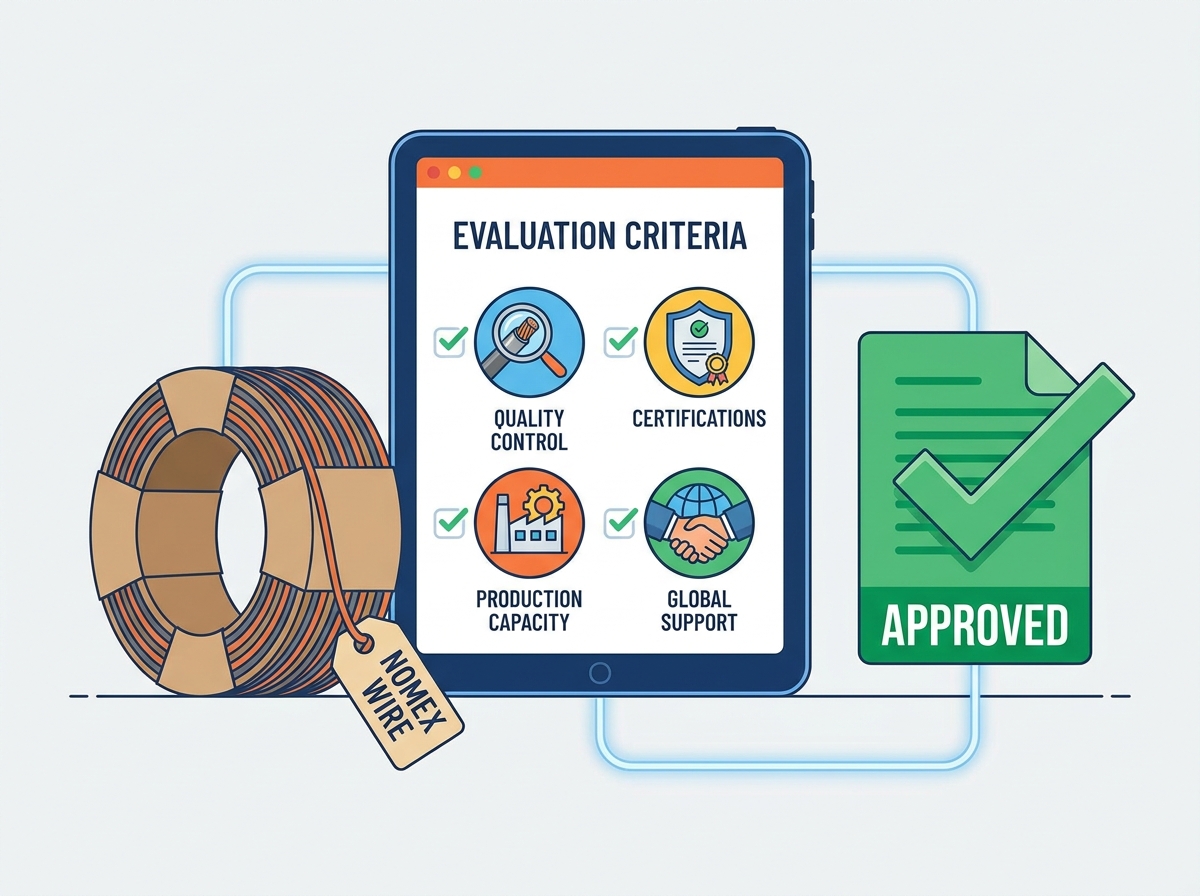
Sourcing high-temperature insulation wire dictates the reliability of your entire build. Insulation failure remains the leading cause of catastrophic breakdowns in heavy-duty transformers, traction motors, and wind turbine generators. Procurement and engineering teams face a saturated market of suppliers claiming high thermal and mechanical performance. However, substandard wrapping tension, impure conductors, hidden insulation damage, or counterfeit aramid paper lead directly to equipment recalls, dielectric breakdown, and premature system failure. To mitigate supply chain risk and ensure long-term operational integrity, engineering and procurement teams must systematically evaluate a Nomex paper covered wire manufacturer across material authenticity, production precision, conductor treatment, and application-specific compliance testing before committing to a bulk order.
Material Authenticity is Non-Negotiable: Verification of genuine DuPont Nomex® versus unverified, generic aramid substitutes is the first critical filter for shortlisting any paper wrapped wire supplier.
Precision Dictates Performance: The manufacturer’s ability to control wrapping tension, gap tolerances, and overlap consistency directly impacts the dielectric strength and tear resistance of the wire during high-stress coil winding.
Hybrid Insulation Capabilities: Top-tier manufacturers must offer advanced configurations, including Nomex paper covered enameled copper wire, to meet demanding dual-layer insulation requirements.
Testing Transparency: Reliable suppliers provide comprehensive, batch-specific testing data covering thermal shock (up to 220°C), moisture resistance, cold resistance, and mechanical shrinkage/compression.
Scalability and Risk Mitigation: Evaluating a supplier requires assessing their capacity to transition seamlessly from prototyping and sample testing to high-volume, on-time production runs.
Defining the baseline operational requirements for high-performance paper wrapped wire is essential when designing dry-type transformers, high-voltage motors, oil-immersed distribution equipment, and generators. These applications operate under continuous mechanical and electrical stress. They require insulation materials that will not degrade, thin out, or lose dielectric strength over decades of continuous service. The success of the final electrical apparatus relies heavily on the physical and chemical stability of the winding wire. When you wind a massive transformer core, the wire undergoes severe bending, pulling, and clamping. The insulation must survive this installation process without a single micro-tear.
Insulation must withstand continuous operating temperatures up to 220°C. High-quality aramid paper achieves this without shrinkage, compression, or rapid thermal aging. When a transformer operates at peak load, the internal temperatures spike rapidly. The insulation layer must maintain its structural integrity. If the paper shrinks or compresses under the mechanical clamping forces of the coil, the turn-to-turn distance decreases. This reduction in physical space directly lowers the dielectric safety margin, increasing the risk of a short circuit. You need materials that hold their dimensions under extreme heat and pressure.
The real-world consequences of poor-quality wire are severe and expensive. Substandard insulation leads to thermal breakdown and mechanical stress fractures during the winding process. Weak paper tears easily under the tension of automated winding machines, forcing operators to stop production and scrap entire spools. Furthermore, inferior wrapping leaves the conductor vulnerable to acid, alkali, cold environments, or moisture ingress. Once moisture or contaminants breach the insulation layer, dielectric failure is inevitable. Choosing a reliable supplier prevents these catastrophic field failures and keeps your production lines moving efficiently.
Auditing a supplier’s material sourcing is the first step in the evaluation process. You must ensure they use authentic DuPont Nomex® paper rather than low-grade, unverified aramid alternatives. Generic substitutes often fail under sustained thermal loads. They may look identical on a visual inspection, but their molecular structure degrades rapidly when exposed to continuous 220°C heat. Authentic material guarantees the thermal and mechanical baselines required for heavy-duty applications. Do not accept verbal confirmations; demand hard proof of material origin.
Request official Certificates of Origin and DuPont partner credentials. A credible manufacturer will easily provide batch-specific Material Data Sheets (MDS) for the raw insulation paper. Traceability is vital. You need to know exactly where the paper originated and when it was manufactured. This documentation creates a transparent supply chain, protecting your projects from counterfeit materials that compromise safety. If a supplier hesitates to provide this paperwork, walk away immediately.
Verify that the selected paper grade matches your specific mechanical and dielectric requirements. Different types of aramid paper offer varying levels of thickness, density, and tensile strength. The manufacturer should guide you in selecting the exact grade that aligns with your target application. For example, some builds require maximum tear resistance for tight winding radii, while others need specific porosity for optimal oil absorption in liquid-filled transformers. Match the paper grade to the exact engineering spec.
The manufacturer's machinery must guarantee precise overlap percentages. Common configurations include 30%, 50%, or custom multi-layer wraps. The wrapping process must occur without gaps, wrinkles, or loose sections. Inconsistent tension creates weak points. A loose wrap compromises dielectric strength, while a wrinkled wrap adds unnecessary bulk, making it difficult to fit the wire into tight stator slots. Precision machinery with automated tension feedback loops is required to maintain this consistency across miles of wire.
Assess how the manufacturing process preserves the inherent flexibility, elasticity, and high tear resistance of the paper. The finished wire must withstand the extreme mechanical stresses and abrasive forces of high-speed, automated coil winding. If the wrapping tension is too high during production, the paper loses its elasticity and becomes brittle. It will snap or tear when bent around the corners of a transformer core. Ask the supplier about their tension calibration schedules.
Evaluate the supplier's capability to provide custom-engineered layering options. High-voltage applications often require multiple layers of paper to achieve the necessary dielectric barrier. The manufacturer should demonstrate their ability to apply these layers smoothly and consistently, tailoring the insulation thickness to your precise voltage and space constraints. Multi-head wrapping machines are typically required for this level of customization.
Establish hard criteria for evaluating the core conductor. Whether you specify oxygen-free copper (OFC) or electrical-grade aluminum, the base metal purity must be exceptionally high. High purity ensures optimal electrical conductivity and low resistance, which directly reduces heat generation within the coil. Ask for metallurgical test reports to verify the conductivity ratings of their raw metal stock. Accept nothing less than 99.9% purity for copper applications.
Surface preparation is an absolute necessity. The conductors must be perfectly smooth and burr-free. Any micro-burrs or sharp edges on the metal surface will puncture the paper insulation from the inside out under operational vibration. A reputable manufacturer utilizes advanced drawing and polishing equipment to eliminate all surface imperfections before the wrapping process begins. Run your hand along a sample; it should feel like glass.
Assess the manufacturer’s capability to produce hybrid insulation systems. Film-insulated copper wire wrapped in aramid paper provides superior turn-to-turn dielectric strength. This dual-layer configuration offers exceptional mechanical protection for high-frequency or high-voltage applications. It prevents shorts even if the outer paper layer sustains minor mechanical damage during installation.
Insulation Type | Primary Benefit | Ideal Application |
|---|---|---|
Bare Conductor + Nomex Paper | High thermal stability, excellent oil absorption | Standard oil-immersed transformers |
Enameled Conductor + Nomex Paper | Maximum dielectric strength, dual barrier protection | High-voltage traction motors, wind generators |
Multi-Layer Kraft + Nomex Outer | Cost-effective thermal protection | Medium-voltage distribution equipment |
Require strict voltage endurance testing protocols. These tests verify the wire's ability to withstand transient high-voltage surges without insulation breakdown. The manufacturer must provide data showing the breakdown voltage limits of their finished product. This ensures the wire can handle unexpected electrical spikes in the field without failing. Ask for the specific ASTM or IEC standards they use for these breakdown tests.
Evaluate supplier-provided data on thermal shock and thermal cycling. The paper wrapped wire must maintain its physical structure and insulating properties during rapid, extreme temperature fluctuations. In applications like traction motors, temperatures can shift drastically within minutes. The insulation must not crack, delaminate, or lose its bond to the conductor during these cycles. Review their thermal cycling lab reports carefully.
Verify resistance to shrinkage and compression. The paper insulation must resist shrinking, thinning, or compressing under heavy physical clamping forces at operating temperatures up to 220°C. If the insulation thins out over time, the risk of a short circuit increases dramatically. Ask for compression test results conducted at maximum operating temperatures, not just at room temperature.
Determine how the wire maintains elasticity, flexibility, and physical integrity in cold-start or low-temperature environments. Sub-zero temperatures can make inferior insulation brittle. A qualified supplier will provide cold bend test results, proving the wire can be manipulated and operated in freezing conditions without cracking the paper layer. This is especially important for outdoor wind turbine installations.
Review chemical and moisture resistance verification. The manufacturer must demonstrate the wire's long-term resistance to moisture, mild acids, alkalis, and exposure to hot transformer oils. Aramid paper naturally resists many chemicals, but the manufacturing process must not introduce contaminants that compromise this resistance. Check their oil compatibility test data.
Assess accelerated aging tests. Accelerated thermal aging data helps predict the true operational lifespan of the insulation within the finished electrical apparatus. This data provides confidence that the wire will perform reliably for decades, minimizing the risk of premature equipment failure and costly maintenance. Look for Arrhenius plot data to verify long-term thermal endurance claims.
Shortlist suppliers based on strict adherence to international electrical and material standards. Look for compliance with IEC 60317, NEMA MW 33-C, and ASTM testing protocols. These standards provide a universal benchmark for quality, ensuring the wire meets rigorous global safety and performance criteria. Request copies of their current certification documents.
Verify facility-level quality systems. The manufacturer’s production facilities should be certified under ISO 9001. If you are sourcing for automotive or electric vehicle applications, IATF 16949 certification is mandatory. These certifications indicate a mature quality management system capable of delivering consistent, defect-free products batch after batch.
Evaluate the manufacturer's capability to process and wrap custom dimensions. Projects often require specific profiles, including round, rectangular, flat, and square wire. The supplier must have the tooling and expertise to wrap these various shapes with uniform tension and precise overlap, regardless of the conductor's geometry. Rectangular wire, in particular, requires specialized corner-wrapping techniques to prevent paper tearing.
Discuss application-specific testing protocols. A strong partner will customize testing criteria based on your unique operating conditions. Whether you need simulated wind-turbine duty cycles or specific oil-immersion scenarios, the manufacturer should be willing to adapt their lab tests to mirror your real-world environment. Off-the-shelf testing is rarely sufficient for highly specialized heavy machinery.
Assess the availability of in-house technical collaboration. The manufacturer's engineering teams should assist with prototype design, insulation thickness calculations, and conductor selection. Direct access to their technical experts streamlines the design phase and helps prevent costly engineering oversights before production begins. You want a manufacturing partner, not just a parts vendor.
Balance Minimum Order Quantities (MOQs) for trial batches against long-term capacity. You need a supplier who supports small prototyping runs but can also handle high-volume, continuous production. Seamless scalability is essential for transitioning from the R&D phase to full-scale commercial manufacturing without switching suppliers. Ask about their maximum monthly tonnage capacity.
Evaluate lead time guarantees and raw material buffers. Review the supplier's historical on-time delivery metrics. Investigate their raw material stock levels, paying special attention to their inventory of genuine aramid paper. A reliable manufacturer maintains strong supply chain contingency plans to prevent project bottlenecks caused by global material shortages. Ask how many months of raw material they keep on site.
The prototyping phase is a critical risk mitigation step. Request sample spools before signing a bulk contract. Inspect and independently test these samples for dielectric strength, overlap consistency, and wrap adhesion. Do not rely solely on the manufacturer's data; conduct your own winding trials to ensure the wire performs well on your specific machinery. Tear down a sample and measure the overlap with calipers.
Establish clear Service Level Agreements (SLAs) in your procurement contract. Include clauses defining the maximum acceptable defect rates (AQL). Outline strict return policies for non-conforming batches. Implement liability clauses for insulation failures traced back to manufacturing defects. These contractual safeguards hold the supplier accountable for maintaining consistent quality and protect your bottom line.
Conduct in-person or third-party facility audits. These audits are crucial checkpoints. Focus your inspection on wrapping machine calibration, conductor cleaning lines, and laboratory testing capabilities. Observing the production floor firsthand provides invaluable insight into the manufacturer's operational discipline and quality control culture. Check if their testing equipment has up-to-date calibration stickers.
Selecting a Nomex paper covered wire manufacturer is not simply a purchasing decision—it is a reliability decision that directly impacts the service life, safety, and performance of the final electrical equipment.
A qualified supplier must demonstrate more than the ability to wrap insulation paper around a conductor. Material authenticity, wrapping precision, conductor quality, testing capability, and production consistency all determine whether the finished wire can withstand long-term thermal, mechanical, and electrical stress in demanding applications.
For transformers, motors, generators, and other high-performance electrical systems, the lowest initial material cost often creates the highest long-term risk. A reliable manufacturing partner should provide transparent material traceability, application-specific technical support, and consistent quality from prototype samples to full-scale production.
By evaluating suppliers through a structured engineering approach, manufacturers can reduce insulation failures, improve production stability, and build more dependable electrical products.
A: Genuine aramid paper insulation carries a 220°C thermal class rating. It handles continuous operation at this temperature without degrading. It also withstands short-term thermal overloads significantly higher than 220°C, making it highly reliable for heavy-duty electrical applications.
A: Request official certificates of authenticity and traceability documentation directly from the supplier. Ask for batch codes and Material Data Sheets (MDS). You can also verify their status as an authorized partner or buyer through DuPont’s official supply chain channels.
A: Common overlap configurations are 30% and 50%. The overlap ensures continuous coverage even when the wire bends. Consistent overlap maintains uniform dielectric safety margins and provides the necessary tear resistance during high-tension coil winding.
A: Aramid paper offers vastly superior thermal shock limits (220°C vs 105°C for Kraft). It absorbs far less moisture, provides higher chemical resistance, and maintains elasticity longer. It does not suffer from the rapid mechanical aging and embrittlement typical of standard Kraft paper.
A: Specify the enameled hybrid version for applications requiring ultra-high turn-to-turn dielectric strength. The dual-layer insulation provides an extra barrier against electrical faults and offers superior mechanical protection against severe operational vibration.
A: Essential testing reports include dielectric breakdown voltage, thermal shock resistance, and dimensional tolerance checks. They should also provide certificates of conformance confirming the specific batch meets the agreed-upon mechanical and electrical standards.